News & Articles

Dear Friends,

Pura Vida

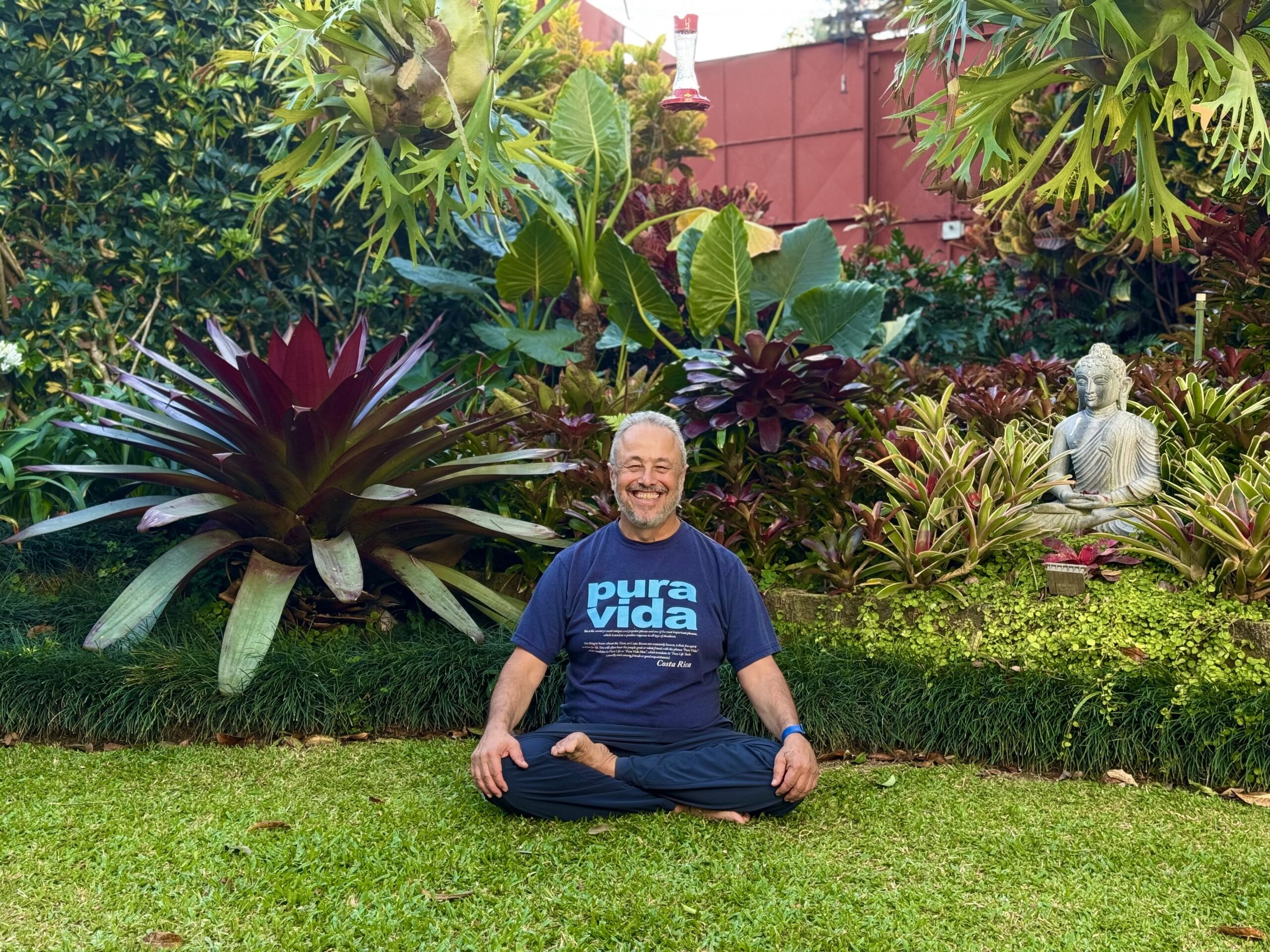
“Pura Vida” is one of Costa Rica’s most beloved expressions. More than a phrase, it is a way of seeing life with ease, gratitude, presence, and appreciation for what is simple and essential. It is a greeting, a farewell, and a way of saying everything is okay. It carries joy, kindness, resilience, and connection to life just as it is.

As I finish this year here in Costa Rica, I feel how this spirit of Pura Vida has woven itself through my journeys, teachings, challenges, and blessings of 2025.

The year began in Curitiba, Brazil, at the Center of Buddhist Studies (CEBB) with Tenzin Wangyal Rinpoche’s teachings, followed by me sharing Tibetan Yoga with their wonderful community. Their Tudo joia (“all joy”) spirit set a joyful tone that supported me even through more difficult moments.

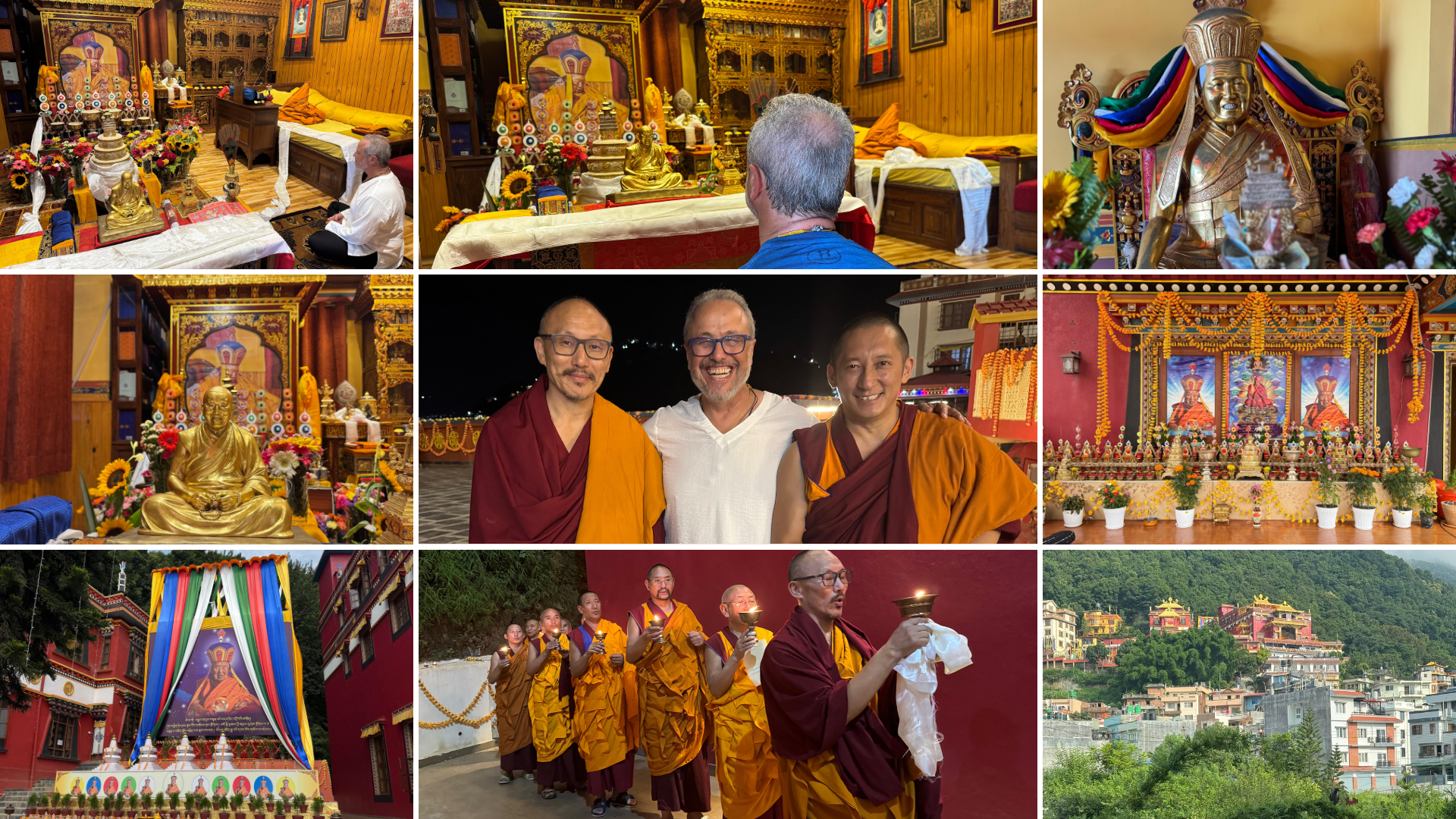
In February, I traveled to Nepal for the 100th birthday celebration of my teacher, Yongdzin Tenzin Namdak Rinpoche. It was deeply meaningful to be present at the conference and contribute to the commemorative book. Afterward, our first Tibetan Yoga travel retreat took us from monasteries to mountains, stupas, and cremation grounds. A profound journey of practice and presence.

In April I helped coordinate and joined Ligmincha International’s Spring Wellness Retreat. In May I taught at Awoken Space in Malibu. June brought the passing of Yongdzin Rinpoche, and his final teaching of obtaining real peace, through what is called tukdam, in Tibetan—remaining in meditation after his death for 8 days.

July was a khora or circumambulation, as I was at Menla (Upstate NY), then Nepal, and Esalen (Big Sur, California). These Summer months held grief, gratitude, devotion, and reflection. Important milestones also unfolded, including IRS non-profit approval for Tibetan Yoga Wellbeing, and a generous support from the Huffington Foundation to support its start.

August, that started at Esalen, followed by Poland with Tenzin Wangyal Rinpoche and I taught Trul khor Tibetan Yoga in Warsaw. September included Shambhala and returning to Curitiba for The 3 Doors Academy.

October was rich and moving, with Ligmincha International’s “Being Present at the Moment of Death” impressive conference, and then the Ellenhorn 20 years celebration True North conference on “Dignified Care”, where I also was one of the presenters.

November led me to France, Morocco, and Spain. Morocco was especially meaningful as our second Tibetan Yoga Wellbeing Retreat, a big step for me personally and in sharing these practices in new contexts. The landscape (especially the desert), the practice, and the heart connection were truly powerful.

And now, I close the year in Costa Rica and Argentina, visiting my family. To be here, warms my heart.  I feel deep gratitude for teachers, family, friends, students, and each of you who continue to walk this path together.

As this year comes to an end, may we each carry a little Pura Vida in our hearts. May we pause, breathe, appreciate simplicity, stay open to joy, and meet life with kindness, resilience, and gratitude.

And, I will be starting the year teaching in Costa Rica and then Esalen, California, surrounded by nature, community, and the spirit of “Pura Vida,” feels like the perfect way to end this year and start the next.

Thank you for being part of this journey. I look forward to what we will continue to explore together in the year ahead.

With warmth, deep gratitude and pura vida,
Alejandro

Dear Friends,

This year has been a full and beautiful one. I traveled and taught in many places, and what has stayed with me the most are the moments of connection, especially unexpected reconnection. These re-encounters felt like gems, each one shining with its own kind of warmth.

In Poland, I was able to spend time with my godson, Lucas, and meet his wife and daughter. Being together after so many years reminded me how meaningful it is to witness someone’s life unfold, even if most of it has happened far from my everyday world. It was also wonderful that they came and filmed the weekend Tibetan Yoga teachings.

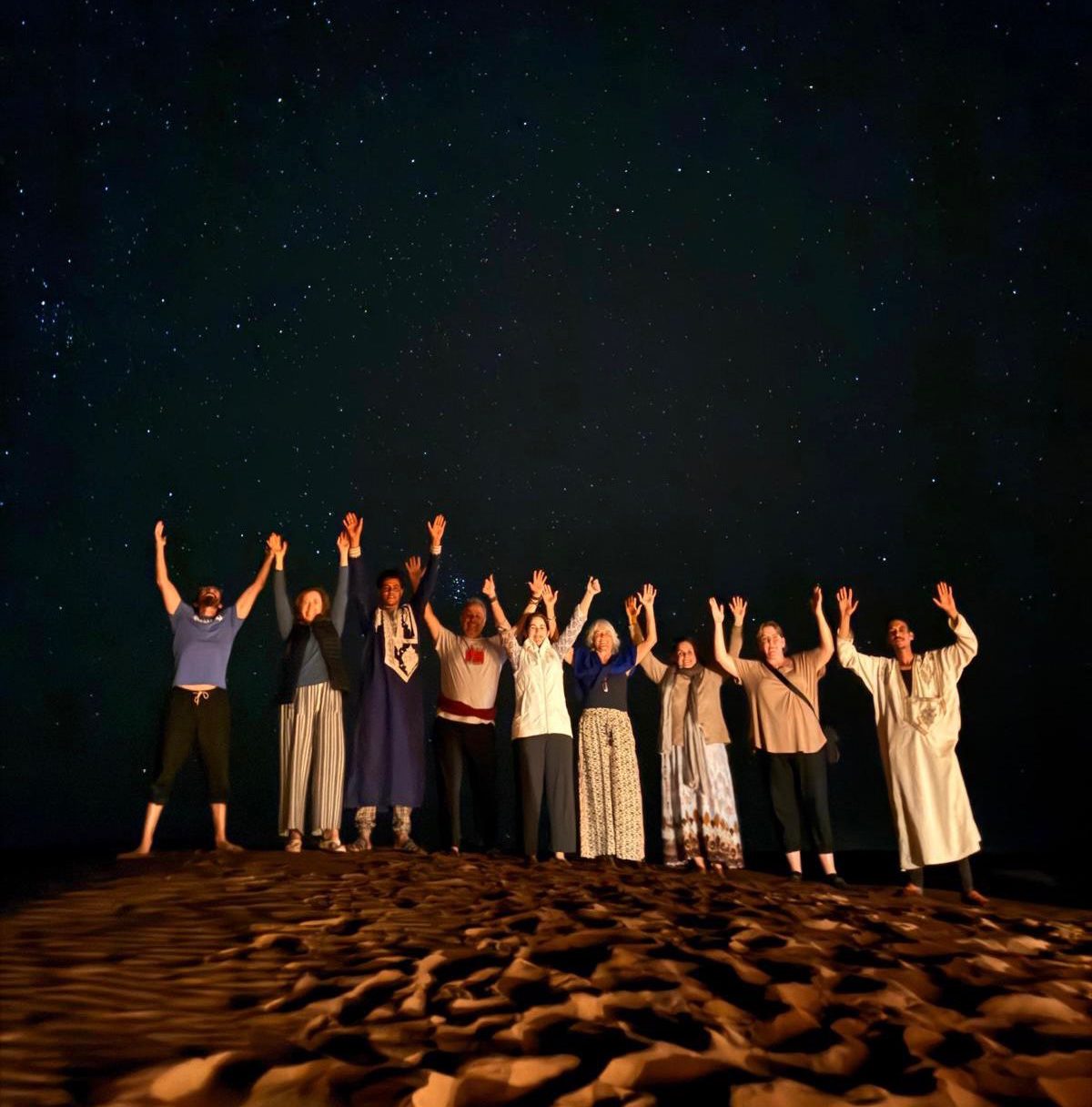
In Morocco, during a retreat surrounded by dunes and stars, I reconnected with my dear friend Cynthia, whom many of us called Chin. Sharing that space with her brought back the feeling of ease and friendship from the days when we worked side by side in the bakery back in Buenos Aires.

And in the Barcelona teachings, Santi, whom I have known since I was probably four or five years old, joined me from London, where he lives now. Sitting together again helped me appreciate how certain connections continue to live in us, even in the long stretches when we are not in touch.

Like the stars in the Moroccan sky, these connections helped me remember something essential. That even in a busy year, there are moments when life invites us to pause, to look up, and to reconnect with the people and places that make us who we are.

As I look back on these moments, I feel a deep gratitude for the simple gifts that arrive when we slow down enough to notice them. Reconnection does not always require grand gestures. Sometimes it appears quietly in a conversation, a shared meal, or coffee, or the smile of someone who knew us at a different time in our lives. I carry these encounters with me as gentle reminders to stay open, to listen, and to allow life to touch the heart in unexpected ways. May this season offer you the same sense of renewal and closeness, wherever you find yourself.

Next year, I am also planning to travel and teach in various places again. You can see below that in January i’ll be in Esalen in the beautiful Big Sur, teaching with my great friend and wonderful teacher, Eve Ekman, and later in the year at Omega, Menla, and a trip to Nepal and Tibet in the late Summer/early Fall. I am looking forward to more moments of connections and open to more unexpected gems!

If you would like to join future retreats or stay updated on upcoming offerings, you can write to info@alechaoul.com or directly to alechaoul@gmail.com, or connect with me on Facebook, Instagram, or LinkedIn.

With warmth and gratitude,
Alejandro

Dear Friends,

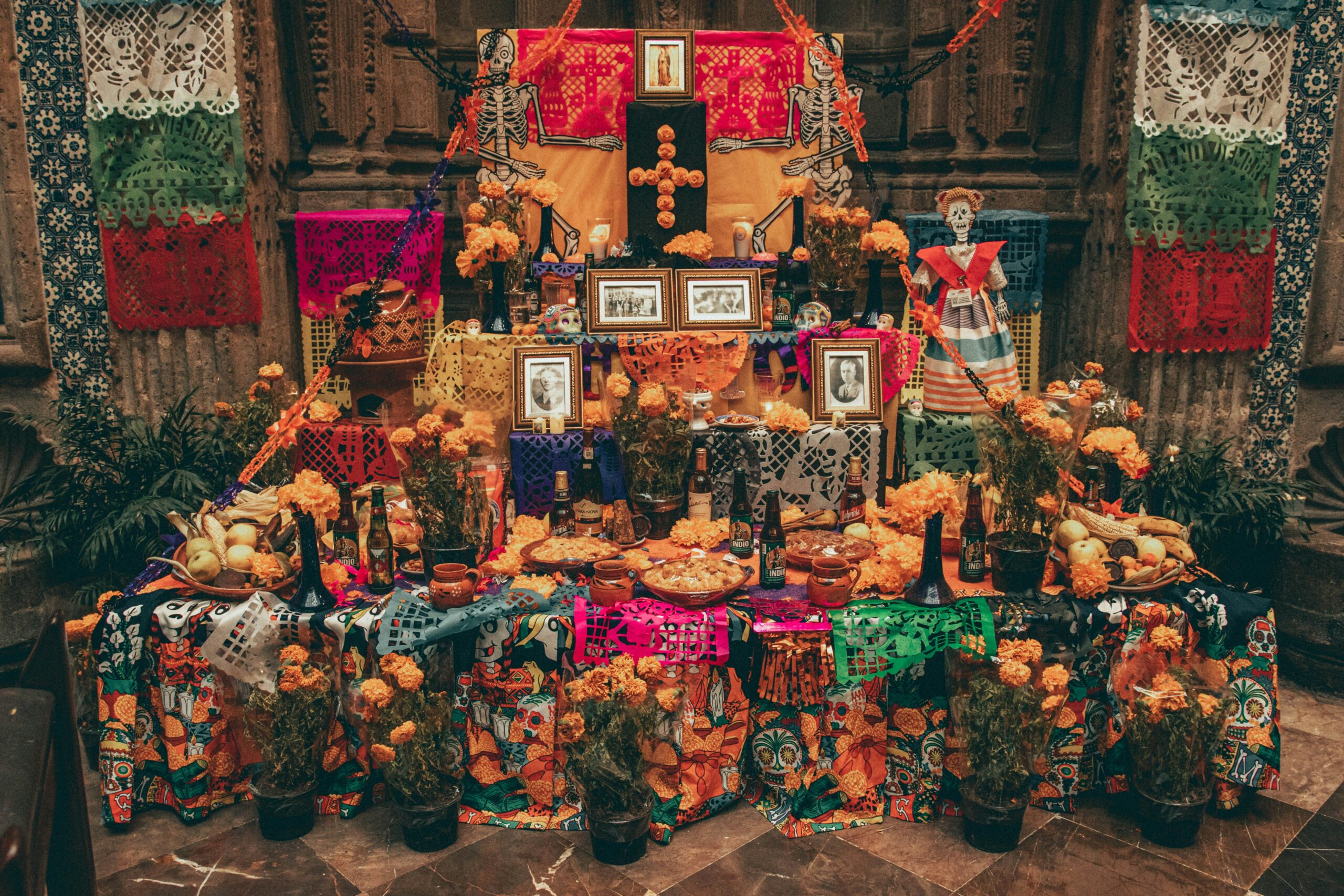
As we enter a time when many cultures remember their ancestors and celebrate the Day of the Dead, I’ve been reflecting on how powerful it is to pause and contemplate on impermanence. These celebrations are not only about those who left before us, but also a reminder that one day we too will be that skeleton, hopefully dancing, and that how we live now matters deeply.

A couple of weeks ago, at Ligmincha International’s Fall Retreat at Serenity Ridge, guided by my teacher Tenzin Wangyal Rinpoche, we explored the theme Being Present at the Moment of Death. It was a deeply moving retreat. We were joined by four wonderful speakers: Dr. Leslie Blackhall, Father Francis Tiso, Nikki Mirghafori, PhD, and Tibetan doctor Tenzin Namdul. Our great teacher Lopon Yongdzin Tenzin Namdak Rinpoche had just passed away at 100 years old and remained in tukdam—a meditative state after death—for eight days. This felt like a gift to all of us. Rinpoche reminded us that Lopon’s passing was the best example of dying, and of having lived a wonderful meaningful life. Rinpoche also taught us a simple phowa practice to practice now and be ready to do at the time of death.

I had the honor of moderating the dialogues. Nikki reminded us, the main cause of death is being born. In the Buddhist traditions we speak about the four sufferings: birth, old age, sickness, and death. Growing up in Argentina in the 1970s during the military regime, with bombs going off near our home and people suddenly ‘disappearing’, I learned very early that life is uncertain. I used to wake up in the middle of the night sweating, thinking, “I am going to die, and then what?”—what I later called my ‘existential attacks.’

Somehow Siddhartha by Herman Hesse came into my hands when I was still very young. I read it many times, and I still have that copy in Spanish. It opened the door to meditation. A few years later, my best friend’s uncle taught me Transcendental Meditation, which helped those existential attacks soften. When I later met Tibetan Buddhism, impermanence was at the center of the teachings. At first, it brought back some anxiety, but slowly, by familiarizing myself with it, it brought more meaning. When I started teaching at MD Anderson Cancer Center, I was not sure if I should speak so directly about impermanence, but many patients actually appreciated not avoiding it and instead approaching it in a compassionate, practical way. One of my teachers, HH Lungtok Tenpa Nyima, told me that it was also important for myself, as by teaching on impermanence it was a good reminder of my own impermanence too.

As I was going to the retreat, a friend asked me, “Why would you want to be present at the moment of death?” What we received in this recent retreat was very profound. Clear teachings from Rinpoche, rich perspectives from the presenters, and the engagement of the participants created a space where we could look at death in a way that can impact how to live more meaningfully. With Rinpoche’s guidance, it showed us how we can care for this body and mind in a way that allows us to face change, loss, and even death with more openness.

So, what is your relationship to death? I would like to leave you with an exercise that I used to teach in my course for medical students on Death and Spirituality in Medicine: I invite you to write your own obituary. Reflect on what you would like to be remembered for, the many identities you lived as, and something spiritual about how you live and how you would like to leave. It is a profound exercise that often brings surprising clarity and gratitude.

Many of the practices I learnt from my teachers are precisely for this: to live fully, meaningfully, and with awareness. If you want to explore some of the teachings I share, I invite you to join my free online meditations in English and Spanish, my in-person and online retreats, as well as my courses and books. You can also reach out for some one-on-one consultation.

You can write to info@alechaoul.com or directly to alechaoul@gmail.com, or connect with me on Facebook, Instagram, or LinkedIn.

Back in 1989, my spiritual journey took a big leap, outwards and inwards.

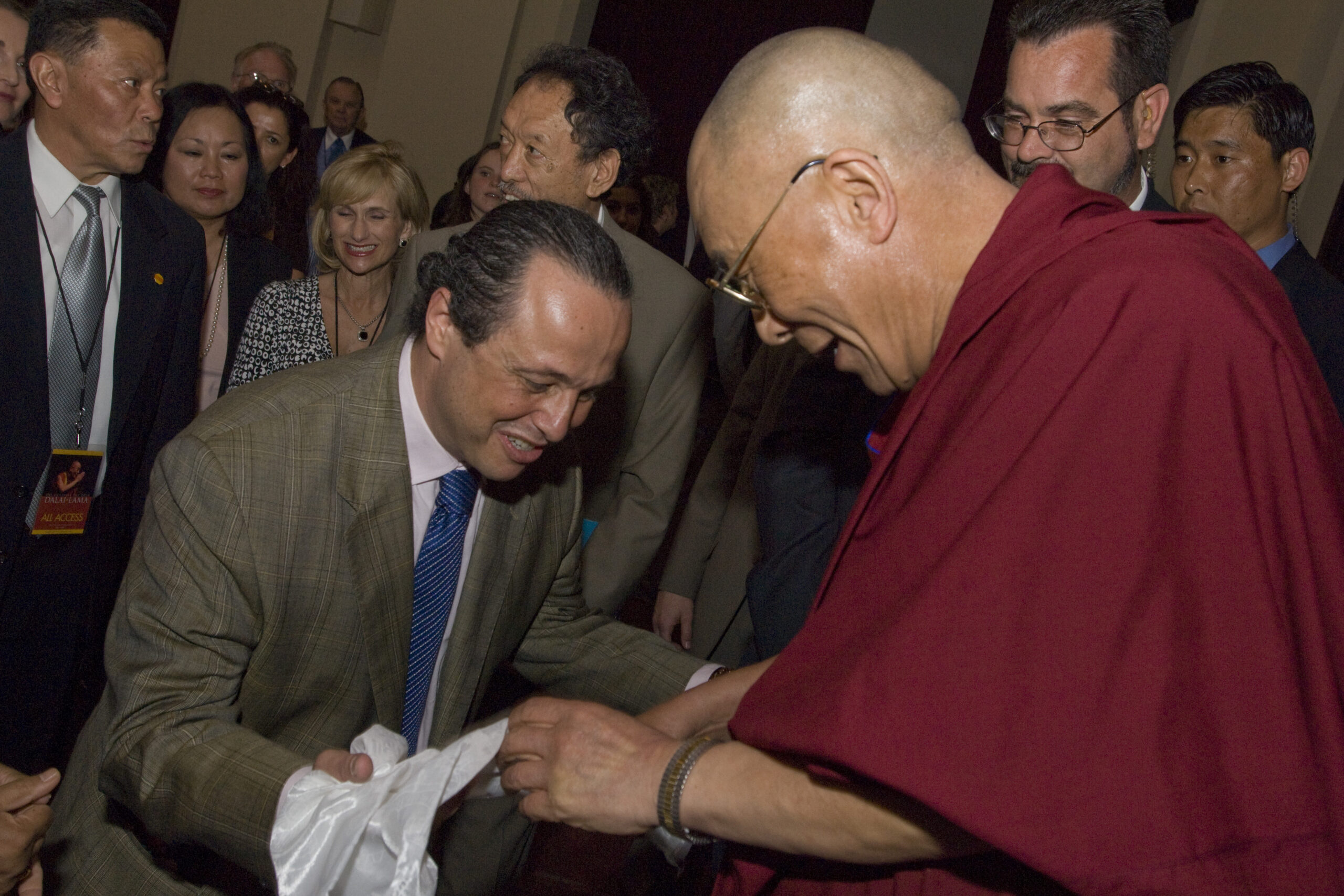
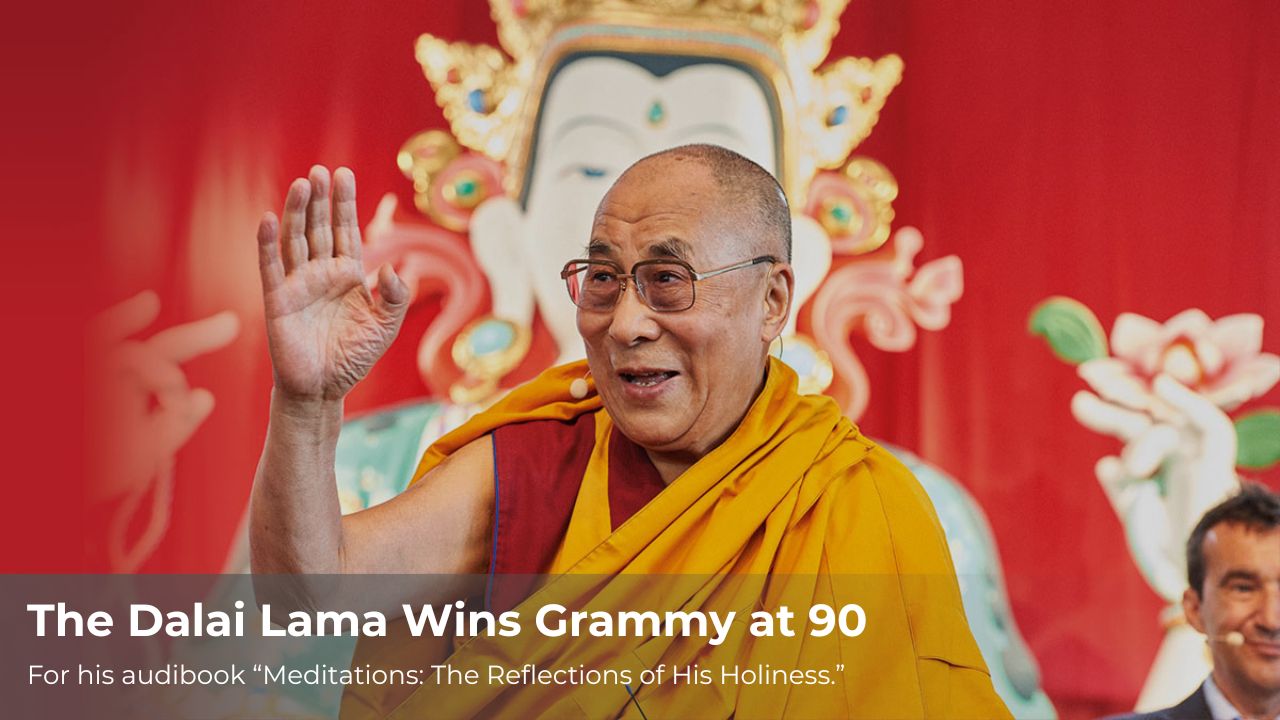
I traveled to India and Nepal, meeting many teachers and amazing people of different religions. While I was in Kashmir, I was living in the beautiful area of Pampore, where saffron grows. Biking to the big city of Srinagar, I saw in the English newspaper that His Holiness the Dalai Lama had been awarded the Nobel Peace Prize. Even though I knew very little of him, and got to see his photos and the reverence given to him by the monks in Ladakh, I was so happy, as if my mom or dad had won it.

I said to myself that I needed to meet him in person, and so I went to Dharamsala, where he and thousands of Tibetans had settled after escaping Tibet in 1959.

My first meeting with His Holiness the Dalai Lama was extremely meaningful and changed my life forever. During my brief interaction with him, I was speechless, absorbing the moment, his energy, and his blessings. I then sat under a tree still within the compound; sitting in awe I felt  tears in my eyes and my heart open like a big smile. And to top it off, as the last person interacted with him, I heard him say, “A big heart is the best religion.”

This stayed in my heart, and in 1992, as I was one of the organizers of his visit to Argentina, we published a small book of his teachings, and of course called it Un Buen Corazón es la Mejor Religión (A Good Heart is the Best Religion).

This was the beginning of what is now a 30+ year journey with Tibetan teachers and their teachings.

All I can say now is Thugjeche, the Tibetan for “thank you,” which literally means “a big trace in my heart.”

Warmly,

Alejandro

Jeff Fitlow fitlow.com

Dear Friends,

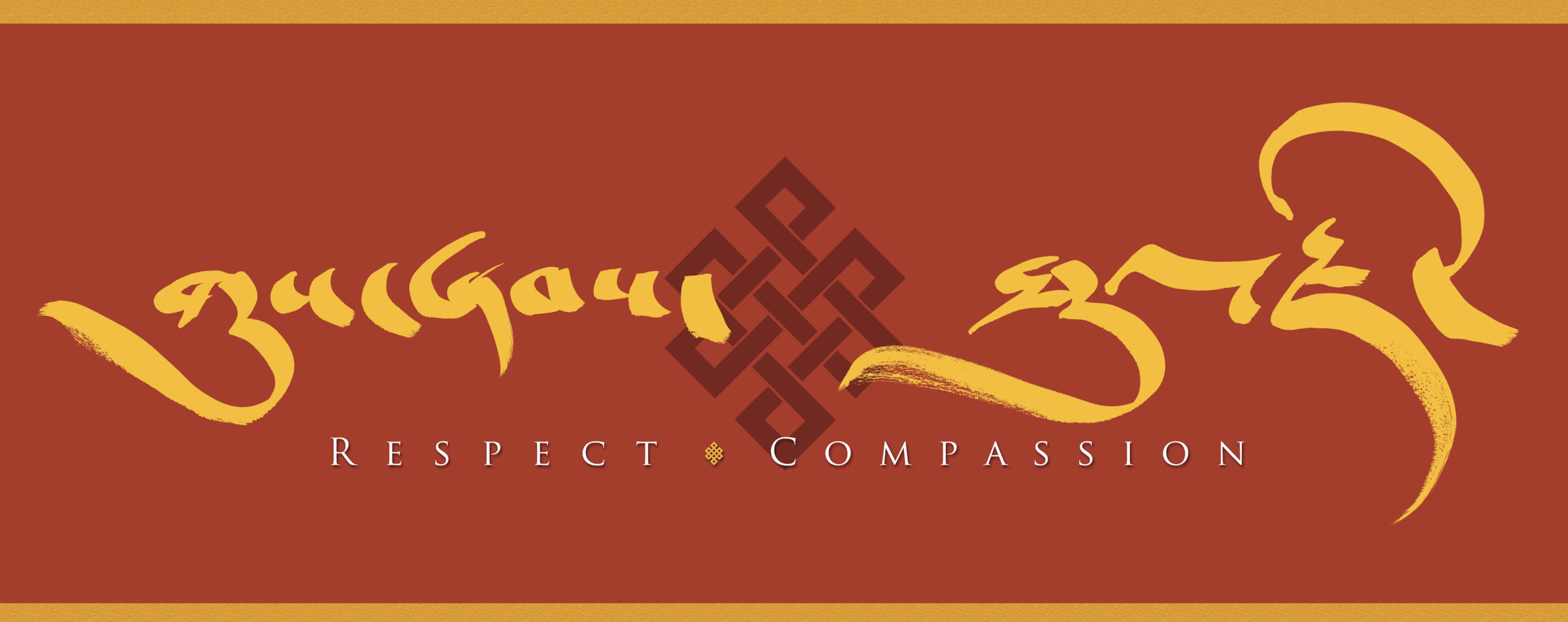
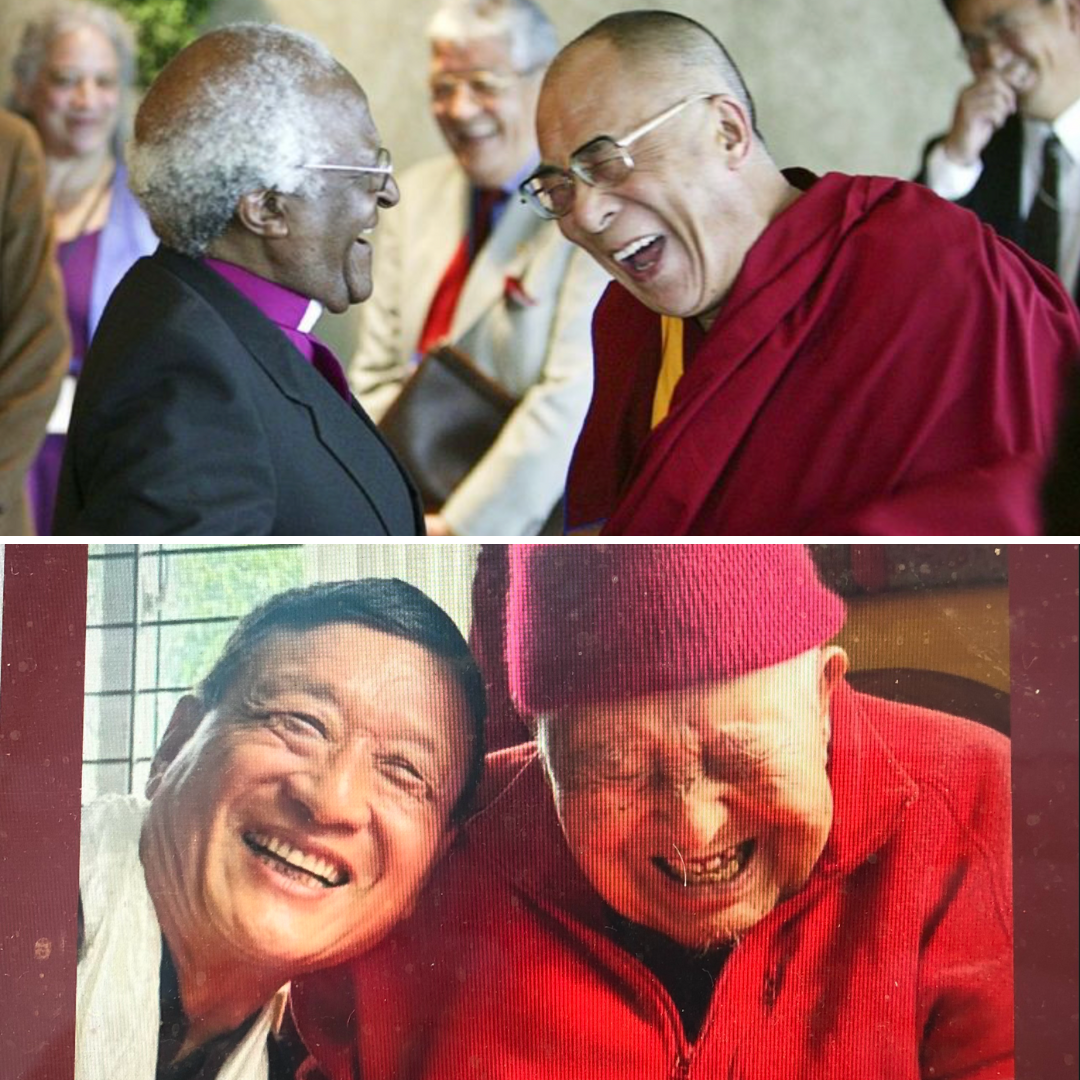
       A few weeks ago, in South Africa, I had the moving experience of visiting the Apartheid Museum and the home of Nelson Mandela. Throughout my visit, the words respect and compassion echoed deeply. One image especially struck me: a photograph of Rev. Desmond Tutu and His Holiness the Dalai Lama. It brought me back to a moment years ago when His Holiness spoke at Rice University in Houston, TX. My teacher, Tenzin Wangyal Rinpoche, created two beautiful calligraphies for that occasion, which were used to accompany His Holiness’ teachings.

Respect and compassion for oneself and for others. Respect for the powerful lineage that carries and teaches compassion. These reminders feel especially alive for me now as I continue to deepen into practice and teaching in the months ahead.

Most recently, I had the pleasure of teaching in Poland, where I also had the joy of receiving teachings directly from Tenzin Wangyal Rinpoche. Next week, I will be teaching on the Six Session Practice, a powerful cycle Rinpoche developed when he first began teaching in the United States,  that includes one of my favorite dzogchen practices called contemplative breathing. I will share these teachings at Shambhala Boulder as a preparation for Rinpoche’s upcoming teachings on Trekchö and Tögal.

Looking further ahead, in October, at Ligmincha International, Rinpoche will teach on phowa and preparing for death. I will be honored to moderate dialogues during this retreat with wonderful guest speakers, including Nikki Mirghafori, Dr. Leslie Blackhall, and Tibetan Doctor Tenzin Namdul. Then in November I will be in Europe and leading a fantastic trip to Morocco.

I warmly invite you to join us in these opportunities and to look for other upcoming events in my website alechaoul.com to deepen into practices that nurture respect and compassion for yourself, for others, and for the world.

Warmly,
Alejandro


Dear Friends,

              It was such a heartwarming and profound experience to return to Kathmandu, this time to say goodbye to the body of my very dear one hundred-year-old Teacher, Lopon Tenzin Namdak, also known as Yongdzin Rinpoche, who had been my guide and inspiration for 34 years. He was an extraordinary Teacher and an incredible human being whose presence touched countless lives. The community of monks, practitioners, and friends gathered around him was a testament to the deep imprint he left on all of us.

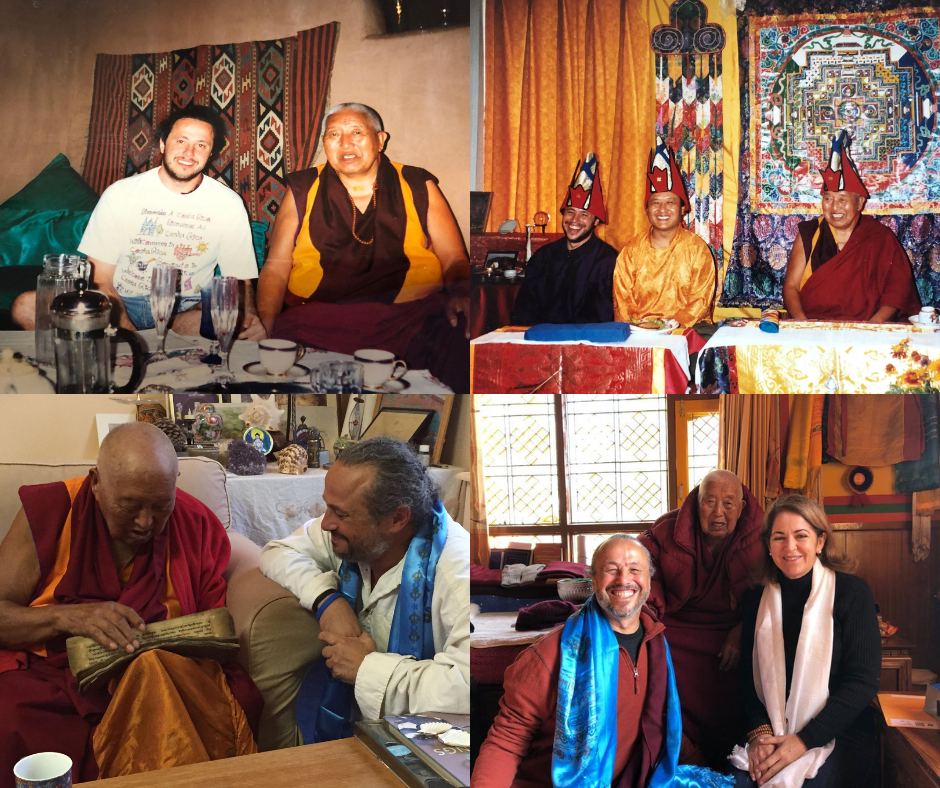
What can I say about such a remarkable person? He taught us to rest in our natural state of mind, guiding us through complex teachings in a way that felt simple and natural. There are so many stories and memories from these decades together, some of which I have shared before. Yet what stays with me most is the sense that this was not a goodbye. As our dear Khenpo Tenpa Yungdrung said, it does not seem as if he has left. It feels as though his presence remains, stronger than ever, in the hearts of those he touched.

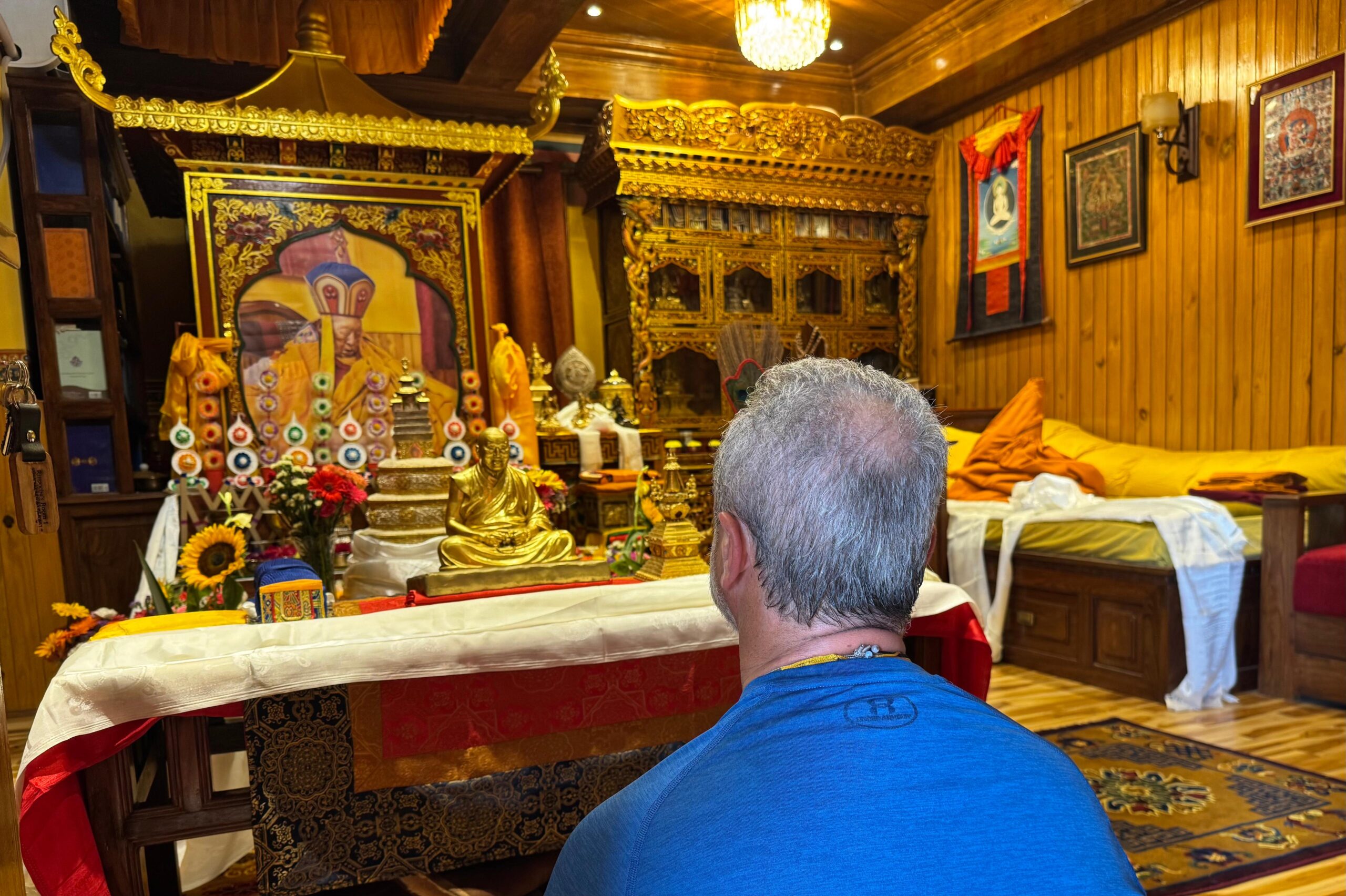
This trip was not something I had planned, but I am deeply grateful that I went, even for a short time. In the days before, I had been reading a special prayer from another teacher for being in front of the teacher’s body (kudung) after he had passed. I felt inspired to recite this prayer in the presence of Lopon’s kudung, and it became one of the most meaningful moments of my life. Also, sitting inside and outside of his room meditating, i remembered so many  moments of learning, practicing, sharing, and laughing.

I carry these blessings deeply in my heart and into my own practice, so that I may continue to share them with others. May his wisdom and compassion continue to guide us all.

Warmly,
Alejandro

         For Yongdzin Tenzin Namdak Rinpoche (aka, Lopon)’s 100th birthday, I wrote an article for his festschrift celebratory publication titled “A Truly Magical Encounter.” In it, I shared the story of meeting Lopon in 1991, visiting Triten Norbutse Monastery in Nepal a couple of years later at his invitation, and learning—almost by chance or coincidence—the Tibetan Yoga known as Trul khor, translated as “Magical Movements.”

This particular yoga comes from the special Dzogchen compendium, the Aural Transmission of Zhang Zhung, taught through a profound commentary by the great scholar and practitioner Shardza Tashi Gyaltsen, who attained rainbow body at his death.

This yogic practice has enlivened my life in countless ways from my daily practice, to my academic work, to my teaching and my work in hospitals. That is why I dedicated the translation of Shardza’s commentary, as well as my book Tibetan Yoga: Magical Movements of Body, Breath, and Mind, to our dear Lopon.

While staying at Triten Norbutse, I was able to practice with the yogic group and learn Trekchö—the meditation to cut through mental elaborations—directly from Lopon. Our morning and evening sessions, led by Khenpo Nyima Wangyal (aka Khenpo Tashi), combined prayers and Trekchö meditation, and whenever our minds strayed to dullness or agitation, we used Trul khor as a kind of reset. In fact, Lopon often said these magical movements should be employed when one’s meditation feels unclear, unstable, or weakened. You might think of it as a reboot that clears out any “bugs” in the system.

With Lopon and Tenzin Wangyal Rinpoche’s blessings and support, I began bringing these practices into health environments at the turn of the millennium—first through clinical research and integrative medicine at MD Anderson Cancer Center in Houston, then into the mental health field via the Jung Center’s Mind Body Spirit Institute, which I founded, and now through Tibetan Yoga Wellbeing. Throughout this journey, Lopon has always been my guiding star, with Rinpoche as the captain.

On June 12th, Lopon passed away and remained in meditation (Tukdam) for a week. At a time when much of the world was caught in wars and proclamations of peace, Lopon showed us what true peace actually looks like.

I remember celebrating his 95th birthday at Triten Norbutse with my wife Erika. In one of our precious private moments with Lopon, Erika asked him if he felt pain (as he was in a wheelchair) and how his meditation helped. He smiled and replied, “Do I feel the knee blessed by a Chinese bullet? Yes. Does it disturb my peace of mind? Absolutely not.”

Though he has left his body, as many have already shared, his presence is still pervasive and palpable—both around us and in our hearts. It continues to inspire us to carry forward his beautiful legacy. Those magical movements I first learned over 30 years ago at Triten Norbutse, deepened through practice at Menri Monastery with His Holiness Lungtok Tenpa Nyima and Ponlob Thinley Nyima, with Khenpo Tenpa Yungdrung at Tristan Norbutse, and with Tenzin Wangyal Rinpoche at Ligmincha, are what I continue to teach through Tibetan Yoga Wellbeing.

Join me at Esalen, Morocco, and let’s keep this magic alive and vibrant in our hearts, through body, breath, and mind.

Warmly,
Alejandro

And get a discount for the new course: https://wisdomexperience.org/tibetan-yoga-2/

Alejandro Chaoul, Mary Taylor, and Richard Freeman in lively conversation discussing Alejandro’s new book, “Tibetan Yoga, Magical Movements of Body Breath and Mind” as well as his longtime work with Sound Healing.

It can be a challenge to quiet the mind. Join Alejandro Chaoul for this grounding meditation designed to help you release distractions as they appear (without judgment), and experience deep stillness. Get better sleep, decrease stress, and relieve anxiety with over 200 ad-free meditations.

Listen to the podcast…